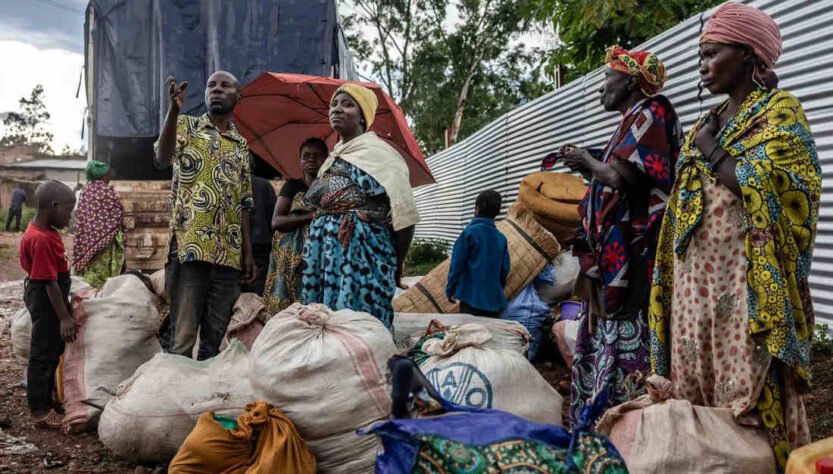
More than 33,000 Congolese refugees living at the Busuma site in eastern Burundi are facing increasingly difficult conditions as heavy rains threaten their temporary shelters. Many families are still living under worn-out tarpaulins or in makeshift structures that offer limited protection from strong winds, cold nights and water infiltration. What was initially an emergency shelter arrangement has become a prolonged and increasingly fragile living situation.
The concerns are no longer limited to forecasts. Heavy rainfall, strong winds and soil erosion affected the Busuma site in October, damaging hundreds of shelters and essential infrastructure. Humanitarian agencies have warned that the combination of deteriorating accommodation, inadequate sanitation and reduced funding could leave thousands of people exposed to further hardship during the rainy season.
The situation is particularly worrying for children, older people and families who have already lost their homes after fleeing violence in the eastern Democratic Republic of the Congo (DRC).
Families Living Under Worn-Out Tarpaulins
The Busuma refugee site, located in Ruyigi in eastern Burundi, was established in December 2025 to accommodate Congolese people escaping renewed violence in the DRC. The arrival of refugees quickly exceeded the available reception capacity. Within a few months, approximately 65,000 people had reached the site.
Emergency arrangements included placing some families in communal hangars and providing others with tarpaulins to create temporary shelters. These measures offered immediate protection, but they were not designed to serve as long-term housing.
By October 2026, the condition of many shelters had become a serious concern. Months of exposure to sunlight, wind and dust had damaged some of the tarpaulins. According to a report by SOS Médias Burundi published in October, refugees feared that the weakened materials would not withstand heavy rainfall and strong gusts of wind.
One refugee, identified as Shukuru, described how his family had been living under a tarpaulin for several months. He said that cold nights and wind entering the shelter made it difficult to sleep. At times, family members had to wake up to check whether their makeshift accommodation was still standing.
His concerns also extend to the few belongings the family has managed to keep. If rainwater enters the shelter, clothes, blankets and other essential possessions could become wet or damaged. For households with limited resources, replacing these items would be difficult.
The situation illustrates the vulnerability of people who have already experienced displacement. Having escaped violence in their home communities, many now face another threat: the possibility that their temporary shelters will fail to protect them from the weather.
October Rains Have Already Damaged Hundreds of Shelters
Subsequent reports from humanitarian organisations confirmed that the danger was not merely hypothetical. According to UNICEF’s Burundi Humanitarian Situation Report covering October 2026, heavy rains and soil erosion affected approximately 2,000 people at Busuma on 7 October.
The disaster damaged 510 shelters, as well as drainage and sanitation infrastructure. UNICEF warned that the deterioration of accommodation and sanitation conditions could increase health risks, including waterborne and respiratory diseases. Disrupted shelter arrangements may also create additional protection concerns, particularly for women, children and other vulnerable residents.
A separate update published by the UN Refugee Agency (UNHCR) on 3 November provided further details about the impact of severe weather at the Busuma and Musenyi refugee sites. It confirmed that 510 tents had been affected in Busuma and that approximately 2,000 people required relocation.
The response priorities identified by UNHCR include:
- Relocating affected households: moving people whose shelters have been damaged to safer accommodation.
- Repairing essential infrastructure: restoring damaged facilities and improving the condition of the site.
- Improving drainage and sanitation: reducing the effects of heavy rainfall on water, sanitation and hygiene facilities.
- Maintaining essential services: ensuring that affected families continue to receive the assistance they need.
These measures are particularly important because damage to shelters can have consequences beyond the immediate loss of accommodation. When families are forced to move or share already limited space, access to sanitation, privacy and protection can become more difficult.
The mountainous setting of the area adds another challenge. Heavy rainfall can produce runoff, erosion and water infiltration, making temporary structures and poorly protected pathways more vulnerable. The October damage demonstrates how quickly severe weather can affect living conditions across the site.
Humanitarian Needs Remain High Despite Refugee Returns
The number of people living at Busuma has fallen since the site was established. Beginning in April 2026, voluntary returns to the DRC were organised with the involvement of UNHCR and the authorities in Burundi and the Democratic Republic of the Congo.
According to UNICEF, 21,363 Congolese refugees had returned by 7 October, while more than 33,000 people remained at Busuma and continued to require assistance. Médecins Sans Frontières (MSF), in a statement published on 21 October, estimated that approximately 35,000 people were still living at the site.
Although the figures differ, both organisations describe a substantial population that continues to depend on humanitarian support. The reduction in the number of residents has not removed the need for adequate shelter, clean water, food, healthcare and protection.
For families who remain, the most urgent difficulties include:
- Inadequate accommodation: ageing tarpaulins and temporary structures provide insufficient protection against rain, wind and cold.
- Limited sanitation facilities: the availability of latrines and showers remains far below the needs of the population.
- Food and financial assistance: humanitarian distributions have been reduced, leaving some households struggling to meet basic needs.
- Healthcare and protection: children, older people and people affected by displacement continue to require medical and psychosocial support.
MSF reported that in September there was approximately one latrine for every 119 people and one shower for every 242 people at the camp. These figures highlight the pressure on basic facilities, even before considering the additional difficulties caused by heavy rainfall.
The organisation also reported that its medical teams carried out more than 12,000 outpatient consultations between July and September in the camp and surrounding host community. Many consultations concerned respiratory and intestinal infections. More than 300 people also received specialised medical care during the same period.
Funding Shortages Could Make the Situation Worse
The deterioration of shelters is taking place against a background of reduced humanitarian funding. International organisations working in Burundi have warned that financial constraints are affecting their ability to provide assistance to refugees.
In its October statement, MSF said that food and cash distributions had been repeatedly reduced because of insufficient funding. Shelter needs remained substantial, while some organisations operating at Busuma had funding commitments only until the end of 2026. Others had not secured financing beyond October.
Ouo-ouo Sakouvogui, MSF’s emergency response coordinator at the camp, warned that shelters built at the beginning of the crisis had an expected lifespan of only six months and were already deteriorating as the rainy season began. He cautioned that conditions could become extremely difficult again if the situation did not improve.
Funding shortages also affect services that are less visible than emergency shelter but remain essential to residents. Access to food, clean water, sanitation, healthcare and psychological support depends on the continued presence of humanitarian organisations and sufficient resources.
MSF has also raised concerns about the mental health of refugees. Many people have experienced violence, separation from relatives, the loss of homes and difficult journeys to safety. Prolonged uncertainty and poor living conditions at Busuma add to these pressures.
The organisation’s medical teams have reported demand for mental health support among people experiencing depression, anxiety, psychosis and post-traumatic stress disorder. These difficulties underline that the needs of refugees extend beyond immediate physical protection from the weather.
A Crisis That Began with Violence in Eastern DRC
The displacement that brought tens of thousands of Congolese people to Burundi is linked to the deteriorating security situation in eastern DRC. Fighting involving Congolese government forces and the AFC/M23 coalition forced large numbers of civilians to leave their homes.
The capture of Goma by M23 forces in January 2025 and the subsequent seizure of Bukavu in February contributed to a major displacement crisis across the region. Burundi became one of the countries receiving people fleeing the violence.
The Busuma site was created to accommodate part of this influx. Its rapid growth, however, placed considerable pressure on available infrastructure and humanitarian resources. Emergency shelters that were intended to provide short-term protection have remained in use for months, while the number of people requiring assistance has continued to exceed the capacity of some basic services.
Voluntary returns have allowed thousands of refugees to leave Burundi, but returning home is not necessarily a simple solution for everyone. The security situation in parts of eastern DRC remains fragile, and decisions about returning must take account of conditions in the areas people would be going back to.
For those who remain in Busuma, the immediate priority is more secure accommodation and reliable access to essential services. Reinforcing or replacing damaged shelters, improving drainage and restoring sanitation infrastructure are among the measures identified by humanitarian agencies.
The Need for Safer Shelter Is Becoming More Urgent
The situation in Busuma shows how an emergency response can become increasingly inadequate when displacement lasts longer than initially expected. Temporary tarpaulins and communal accommodation may provide immediate protection, but they cannot replace durable shelter, particularly when families must endure months of exposure to harsh weather.
The damage recorded in October has made the risks more visible. Hundreds of tents were affected, thousands of people faced relocation needs, and essential infrastructure was also damaged. At the same time, humanitarian organisations are warning that funding shortages could limit their ability to respond.
For more than 33,000 Congolese refugees reported at the site in October, the rainy season is therefore not simply a change in weather. It represents an additional threat to families who have already endured displacement and uncertainty.
The next steps will depend on whether humanitarian agencies and their partners can secure the resources needed to relocate affected households, repair damaged facilities and provide more reliable shelter. Without such support, residents of Busuma may continue to face the consequences of living in structures that were never intended to withstand a prolonged humanitarian crisis.
For families who fled violence in the DRC, finding safety in Burundi was supposed to offer protection. Ensuring that this protection extends through the rainy season remains an urgent challenge.