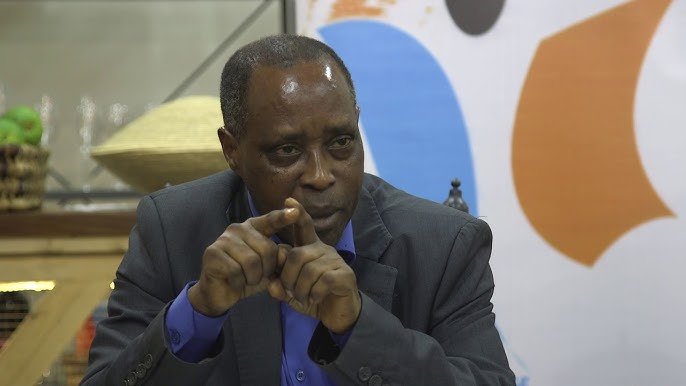
Former National Assembly speaker Léonce Ngendakumana has defended the opposition Sahwanya-FRODEBU party’s decision to boycott Burundi’s 2027 presidential election, warning that political manipulation, economic difficulties and persistent human rights concerns are undermining the country’s future. He has also called for the preservation of former president Melchior Ndadaye’s democratic legacy and urged political leaders to implement long-standing reform proposals.
FRODEBU Rejects Participation in the 2027 Presidential Election
Burundi’s political opposition faces renewed questions over its ability to compete in elections that command public confidence. Léonce Ngendakumana, a member of the Sahwanya-FRODEBU party and former president of the National Assembly, says his party’s decision not to field a presidential candidate in 2027 reflects the conditions under which the vote is expected to take place.
In an interview published by the Burundian newspaper IWACU on 20 October 2026, Ngendakumana backed the decision adopted by FRODEBU’s national executive committee on 10 October. He argued that participating in an election without meaningful changes to the political environment could reinforce existing problems rather than advance democracy.
The former parliamentary speaker pointed to what he described as a history of electoral manipulation, repeated fraud and intimidation. He also recalled the consequences of previous elections, including political killings, forced displacement, economic damage and deterioration in Burundi’s relations with international partners.
Ngendakumana specifically referred to the elections of 2010, 2015 and 2025, arguing that their aftermath should inform decisions about the next presidential contest.
His position is that elections remain the preferred means of obtaining, exercising and peacefully relinquishing political power. However, he believes the necessary conditions must first be established.
According to Ngendakumana, the priorities include:
- Ending intimidation and creating a political environment in which citizens can participate without fear.
- Reviewing the legal and institutional framework governing elections.
- Addressing concerns about the composition and conduct of the National Independent Electoral Commission.
- Ensuring that electoral preparations are credible enough to inspire public confidence.
He stressed that FRODEBU’s objection is not to electoral participation itself, but to what he considers inadequate preparation and organisation.
Ngendakumana also left open the possibility of his party participating in the 2027 presidential election if conditions change. He said the party hopes that the political situation will be put in order ahead of the 2030 legislative elections.
His argument is that the opposition should concentrate on the broader struggle for the rule of law and democratic institutions rather than participate in a contest whose outcome, in his assessment, is already predictable.
Ndadaye’s Democratic Legacy Remains at the Centre of the Debate
A major theme of the interview was the legacy of Melchior Ndadaye, Burundi’s first democratically elected president, who was assassinated during the attempted coup of 21 October 1993.
For Ngendakumana, Ndadaye’s political ideas remain relevant because they challenged the notion that Burundi’s difficulties were fundamentally a struggle between its Hutu and Tutsi communities.
Instead, Ngendakumana described the central conflict as one between a small political elite seeking to preserve its power and a broader population aspiring to peace, reconciliation, democracy and development.
He argued that politicians who mobilise citizens primarily through ethnic, regional or clan affiliations do not necessarily defend the interests of those communities. In his view, the experience of successive governments demonstrates that a leader’s ethnic background does not guarantee better living conditions or political representation for people from the same community.
The former speaker believes that Ndadaye’s legacy includes the recognition that democratic institutions should serve all citizens, regardless of their background.
He identified several elements of that legacy:
- A state governed by law rather than the personal interests of those in power.
- Multiparty democracy and elections as the legitimate route to political office.
- Independent participation by political parties, civil society, the media and religious organisations.
- Reconciliation, peaceful coexistence and equal rights for citizens.
Ngendakumana acknowledged that Ndadaye did not have enough time to implement his programme or allow it to be fully assessed. Nevertheless, he argued that the continued existence of political parties, media organisations and civil society groups represents part of the democratic progress associated with the former president.
He also criticised what he described as attempts to diminish Ndadaye’s place in national history. In particular, he expressed concern about reports of a possible plan to exhume and relocate the former president’s remains.
Ngendakumana said FRODEBU had written to the president seeking clarification about whether such a project existed, what its purpose would be and how it would be managed. He warned that moving the remains could reopen painful historical wounds.
The anniversary of Ndadaye’s assassination therefore remains more than a question of historical commemoration for Ngendakumana. It is closely connected to the unresolved debate over democratic governance and the direction of the Burundian state.
‘A Veiled Dictatorship’: Criticism of the Political System
Asked whether Burundi can be considered a democracy today, Ngendakumana delivered his strongest criticism of the authorities.
“The current government is a veiled dictatorship,” he said, according to IWACU.
He argued that the language of democracy, elections and good governance is widely used by political actors, including representatives of the ruling party, but that the government’s conduct does not consistently reflect those principles.
In his assessment, the central problem is the gap between official commitments and political practice. He believes that democratic institutions lose their meaning when citizens cannot freely express their views, participate in political life or hold those in power accountable.
His criticism also reflects a broader concern about the concentration of political authority and the relationship between the state and the public interest.
Ngendakumana maintained that Burundi’s future depends on protecting democratic principles rather than abandoning them in response to the current political climate. He rejected the idea that democracy has disappeared entirely, arguing instead that its underlying aspirations remain present among citizens.
His remarks represent the opposition politician’s assessment of the political system, rather than an independent determination of Burundi’s constitutional or legal status.
FRODEBU Divisions and the Prospect of Reunification
The opposition party must also confront divisions within its own ranks. Ngendakumana acknowledged that FRODEBU’s fragmentation has been influenced by several factors, including insufficient political education, the trauma of the 1993 coup, personal ambitions and disagreements over how to pursue democratic change.
He said the party had previously sought more time to explain its political programme to the population before elections. In his account, the transition from a one-party state to multiparty politics required greater preparation and education about democratic principles.
The assassination of Ndadaye and the collapse of democratically elected institutions further complicated that process. Ngendakumana also cited the influence of armed struggle, competition for political appointments and individual interests as factors that weakened party unity.
Despite these difficulties, he believes reunification remains possible.
His proposal extends beyond bringing together the different factions associated with FRODEBU. He also wants the party to build partnerships with other political forces that support the rule of law and good governance.
Such an approach, he argued, could help create a broader political movement focused on national reform rather than internal rivalries.
Economic Warning: Burundi Risks Falling Further Behind
Ngendakumana’s concerns extend well beyond electoral politics. He delivered a stark assessment of the country’s economic direction, warning that Burundi is deteriorating and could face the risk of state failure.
He cited developments in industry, organic fertiliser production, telecommunications and the population’s ability to meet basic needs as areas that cause particular concern.
The interview did not provide a set of economic indicators or forecasts to quantify his warning. His remarks were instead a political assessment of what he sees as a growing disconnect between the country’s needs and the government’s response.
For Ngendakumana, the central issue is not a lack of policy proposals. Burundi has already undertaken extensive analysis, held discussions and developed strategies intended to support development, improve governance and combat corruption.
He specifically referred to the national development framework known as Vision 2040–2060, alongside the country’s good-governance and anti-corruption strategies.
The difficulty, he argued, is translating these documents into practical results.
Ngendakumana identified three priorities for addressing the situation:
- Responsible leadership: Political leaders must accept responsibility for the country’s direction and place the public interest above the interests of individuals or political groups.
- Effective institutions: Government bodies must be capable of implementing existing strategies and ensuring that decisions produce measurable results.
- Implementation of reforms: Development plans and anti-corruption recommendations must move beyond policy documents and become concrete action.
He called for what he described as a mental and political transformation, arguing that Burundi cannot continue indefinitely with a system in which the exercise of power becomes confused with the pursuit of the general interest.
The former speaker also appealed to the president and other national actors to recognise the urgency of change.
In his view, the country’s future depends on rebuilding public institutions, restoring confidence and ensuring that national resources and policies serve the population.
Human Rights and Questions About International Oversight
Ngendakumana also criticised the human rights situation in Burundi, arguing that civil, political, economic and social rights are regularly violated.
He described the infringement of fundamental rights as a recurring problem, pointing to cases in which people may be deprived of their lives or forced from their homes and property.
He was equally critical of the international response. Although the United Nations issues reports, recommendations and resolutions, he questioned whether these measures have produced meaningful improvements.
Ngendakumana expressed particular frustration over the mandate of the UN Special Rapporteur on the situation of human rights in Burundi. He argued that the government’s refusal to allow the rapporteur to enter the country, combined with what he considers an ineffective international response, has limited the practical impact of the mandate.
He urged Burundians to organise themselves to defend their rights instead of relying primarily on the United Nations, neighbouring countries or the African Union.
His position reflects deep scepticism about international institutions and their capacity to influence political behaviour when governments resist external scrutiny.
A Call for National Renewal
Ngendakumana’s interview brings together three central concerns: the credibility of future elections, the survival of Ndadaye’s democratic vision and the economic pressures facing Burundi.
His defence of FRODEBU’s electoral boycott rests on the argument that participation alone cannot guarantee democracy. Without changes to the political environment, he believes elections risk reproducing the same problems that have undermined public confidence in the past.
At the same time, his calls for party reunification and broader political partnerships suggest that he sees cooperation among reform-minded actors as essential to changing the country’s direction.
On the economy, his message is similarly direct: Burundi does not need another round of promises without implementation. It needs responsible leadership, institutions capable of delivering results and practical action on development and corruption.
Whether the government will respond to these criticisms remains uncertain. What is clear from Ngendakumana’s remarks is that he views the country’s political and economic challenges as interconnected—and believes that meaningful national renewal requires more than an election. It requires a sustained commitment to democratic accountability, equal rights and the public interest.