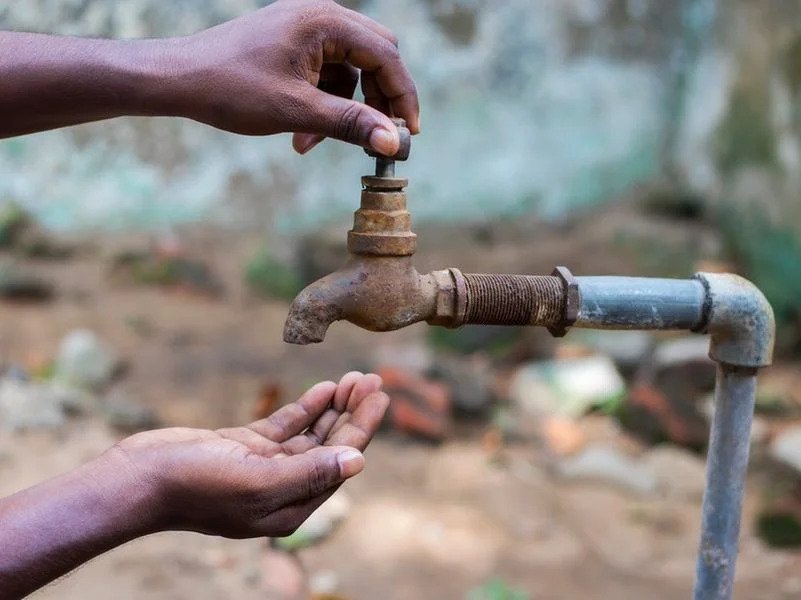
Access to clean drinking water is becoming increasingly difficult in Burundi’s commercial capital, Bujumbura, where residents of numerous neighbourhoods face prolonged interruptions, rising water prices and long queues at public taps. REGIDESO acknowledges the supply problems and has announced infrastructure improvements, but many households continue to struggle to obtain enough water for their daily needs.
Water Shortages Spread Across Bujumbura
A growing number of residents in Bujumbura are facing difficulties accessing drinking water as supply disruptions continue to affect neighbourhoods across the city. For some households, water is available only occasionally, while others report going several days or even weeks without a reliable supply.
In an article published on 19 October 2026, Burundian newspaper IWACU described the situation as particularly serious in Kanyosha, in the southern part of the city. Residents were reportedly spending hours waiting near public taps, water tanks and privately operated boreholes in the hope of collecting enough water for their families.
The shortage has made the sight of people carrying yellow jerrycans a familiar feature of everyday life. Residents move between different water collection points, often without knowing when supplies will become available.
In the Kajiji neighbourhood, people were reportedly queuing around a water tank with a capacity of 10,000 litres. One resident explained that households leave their containers in line and wait, without knowing when the tank will receive water.
The problem is not limited to Kanyosha. Reports from other parts of Bujumbura indicate that the shortage affects both northern and southern neighbourhoods, creating difficulties for families, businesses and public services.
Several areas have experienced particularly serious disruptions:
- Kanyosha, Kajiji and Busoro: Residents report irregular water supplies, long queues at public distribution points and growing dependence on private water sellers.
- Nkenga: Some households reportedly have no REGIDESO water connections and depend on commercial deliveries.
- Carama: Residents have described shortages lasting several years, with some households receiving water only once a week.
- Kinama and Gihosha: Families report irregular supplies, sometimes receiving water during the night or going several days without it.
- Gasekebuye: Residents in the lower part of the neighbourhood reported three consecutive weeks without drinking water in September 2026.
These accounts suggest that access to water varies considerably between neighbourhoods, with some areas experiencing much longer interruptions than others. Reports from residents also indicate that the shortage is becoming a structural problem rather than an occasional inconvenience.
Residents Forced to Spend More on Water
The shortage has created an additional financial burden for households already facing difficult economic conditions. Families that cannot rely on their domestic taps must purchase water from private sellers, use public distribution points or pay people to collect and deliver it.
According to IWACU, residents in parts of Kanyosha have been paying between 3,500 and 4,000 Burundian francs for a 20-litre container of drinking water sold by mobile vendors.
Other sources of water are sometimes cheaper, but their availability depends on electricity and fuel supplies. At a privately operated borehole in Kajiji, one 20-litre container reportedly costs around 300 francs when electricity is available. The price rises to approximately 500 francs when the owner has to use a generator.
However, even these alternatives are unreliable. When electricity is unavailable and there is insufficient fuel to operate generators, water pumping stops.
For residents of Nkenga, the situation is particularly difficult. Some households reportedly pay private water vendors between 100,000 and 120,000 francs or more per month for regular deliveries. This represents a substantial expense for families that have few alternatives.
The shortage has also encouraged the development of informal water-delivery services. Young people transport containers on bicycles, supplying households that cannot obtain water directly from public taps.
A separate report published by Burundi Eco on 24 August 2026 described similar difficulties in Carama and Kinama. One resident of Carama said that he spent at least 10,000 Burundian francs per day hiring someone to collect and deliver water when his household supply was interrupted.
The same publication reported that a 20-litre container generally cost around 1,000 francs in several neighbourhoods, although prices vary depending on the source and delivery conditions.
Electricity Problems Make the Situation Worse
The water shortage is closely connected to another infrastructure problem: unreliable electricity.
In several neighbourhoods, public water points and private boreholes depend on electric pumps. When power is interrupted, these facilities cannot operate, leaving residents without alternative supplies.
This situation has been particularly noticeable in Kajiji, where residents reported that water from boreholes was available only when electricity was supplied.
According to testimonies published by IWACU, some households can spend two or three consecutive days without receiving a single drop of water. Residents who had hoped to rely on public water tanks installed by Amazi Water also encountered difficulties because the equipment required electricity to operate.
The combination of unreliable electricity and insufficient water distribution infrastructure has therefore reduced the effectiveness of alternative supply systems.
For families, the consequences go beyond the inconvenience of having to carry containers over long distances. Water is essential for cooking, washing clothes, cleaning homes, maintaining toilets and personal hygiene.
When supplies become unpredictable, households must reorganise their daily routines around the availability of water. Some residents spend hours waiting at public taps, while others have to arrange deliveries or purchase water at prices they can barely afford.
Health Concerns Grow as Residents Turn to Alternative Sources
The shortage is also raising concerns about public health and the quality of water available to households.
When safe drinking water becomes difficult to obtain, some residents are forced to rely on alternative sources whose quality may not be guaranteed.
A report published by Jimbere on 12 September 2026 described how residents of Mirango II sometimes collect runoff water flowing towards the Nyabagere River for domestic activities, including washing dishes, cooking and bathing.
According to the testimonies collected by the publication, this water can come from different locations, including residential properties and garages. Such sources may expose users to contamination.
Residents who can afford it purchase bottled drinking water, but this option is not financially accessible to everyone.
The risks associated with inadequate water supplies include difficulties maintaining basic hygiene and greater exposure to waterborne diseases. The problem is particularly concerning for children, older people and those living in densely populated neighbourhoods.
Earlier in 2026, SOS Médias Burundi also reported a prolonged drinking-water shortage in Carama I and Carama II. Residents said that the problem had persisted for more than three years, with household water points remaining dry and long queues forming around the few functioning public taps.
These reports demonstrate that the shortage has implications beyond household comfort. Reliable access to safe water is essential for disease prevention, sanitation and the protection of public health.
Why Is Bujumbura Running Short of Water?
REGIDESO, Burundi’s state-owned water and electricity utility, recognises that the city is experiencing serious supply difficulties. However, the company points to several structural factors behind the problem.
According to Jean Albert Manigomba, Director General of REGIDESO, the rapid expansion of Bujumbura and the growing number of residents have significantly increased demand for drinking water.
In an interview reported by Jimbere, Manigomba stated that water demand had tripled or quadrupled since 2005. He also explained that approximately 95% of Bujumbura’s urban population receives water originating from Lake Tanganyika.
The problem is that the development of water infrastructure has not kept pace with the city’s expansion.
Manigomba noted that the last major water-distribution project in Bujumbura was completed in 2005. Since then, the growth in demand has placed increasing pressure on existing pumping and distribution facilities.
In an August 2026 press conference, the REGIDESO director also acknowledged that ageing equipment was contributing to supply difficulties.
The main challenges identified in the available reports include:
- Ageing infrastructure: Pumps, transformers and other equipment require replacement or rehabilitation.
- Growing urban population: The expansion of Bujumbura has increased demand beyond the capacity of parts of the existing distribution system.
- Insufficient pumping capacity: Existing installations have struggled to keep pace with the growth in water consumption.
- Electricity interruptions: Water pumping and distribution facilities cannot operate consistently when power supplies are disrupted.
- Uneven distribution: Some neighbourhoods receive water more regularly than others, generating complaints about the fairness of supply arrangements.
Residents of Gasekebuye, for example, have questioned why the nearby Gikoto area reportedly receives water while households in the lower part of Gasekebuye experience prolonged interruptions. Some residents have alleged irregularities in the management of distribution valves, although these accusations have not been independently established.
REGIDESO Promises Improvements Through the PAEPA Project
The authorities have identified infrastructure investment as the main way to improve water availability in Bujumbura.
REGIDESO has pointed to the Water Supply and Sanitation Access Project, known by its French acronym PAEPA, as an important part of the planned response.
According to information presented by the company’s director general in August 2026, the project includes the rehabilitation and optimisation of existing pumping facilities at Kabondo, which draw water from Lake Tanganyika.
The programme also предусматривает improvements to water treatment and purification facilities, alongside the replacement of ageing pumps and transformers.
REGIDESO has announced that these measures are expected to increase the quantity of water produced from Lake Tanganyika by approximately 30%.
The optimisation of the existing pumping stations is expected to take around six months after the relevant contract is awarded. A separate component involves the construction of a new pumping station in Nyabugete, phase four, with an estimated implementation period of two years.
The World Bank also announced support for Burundi’s water and sanitation sector on 10 December 2025. According to the institution, the approved PAEPA programme is supported by an $80 million grant from the International Development Association, alongside a $10 million contribution from the Burundian government.
The World Bank said that a new drinking-water treatment plant in Bujumbura was expected to add 60,000 cubic metres of clean water per day to the city’s supply. The broader programme aims to expand access to clean water for approximately 615,000 people nationwide, including around 490,000 residents of Bujumbura.
The project also includes measures to improve REGIDESO’s operational performance and reduce water losses.
Residents Continue to Wait for Reliable Water Supplies
Despite the announced plans, the immediate situation remains difficult for many households. Infrastructure improvements require time, while residents need reliable access to water every day.
For families in Kanyosha, Carama, Gasekebuye and other affected neighbourhoods, the priority is straightforward: they want water to flow regularly from their taps without having to spend hours searching for alternative sources.
Residents are also calling for more transparent distribution schedules and a fairer allocation of available supplies. They argue that prolonged interruptions should not leave entire neighbourhoods without water while other areas continue receiving regular deliveries.
The growing shortage highlights a wider challenge facing Bujumbura: ensuring that essential public infrastructure develops at the same pace as the city itself.
The PAEPA project offers the prospect of increased production and improved distribution capacity. However, its eventual impact will depend on the implementation of the planned works, the reliability of electricity supplies and the effective management of the water network.
Until these improvements translate into more reliable services, thousands of residents will continue to face an everyday struggle to obtain one of the most basic necessities of life: clean drinking water.